If your organization has more than one company, a consolidated report rolls several of them into one table. It is a separate report type with a narrower set of fields, because a rollup can only pivot on things every company shares.
Create one
On the Reports page, click New consolidated report. The button only appears when you have access to at least one other company in the organization. Name the report and tick the companies to include. The company you are currently in always owns the report and is always included.
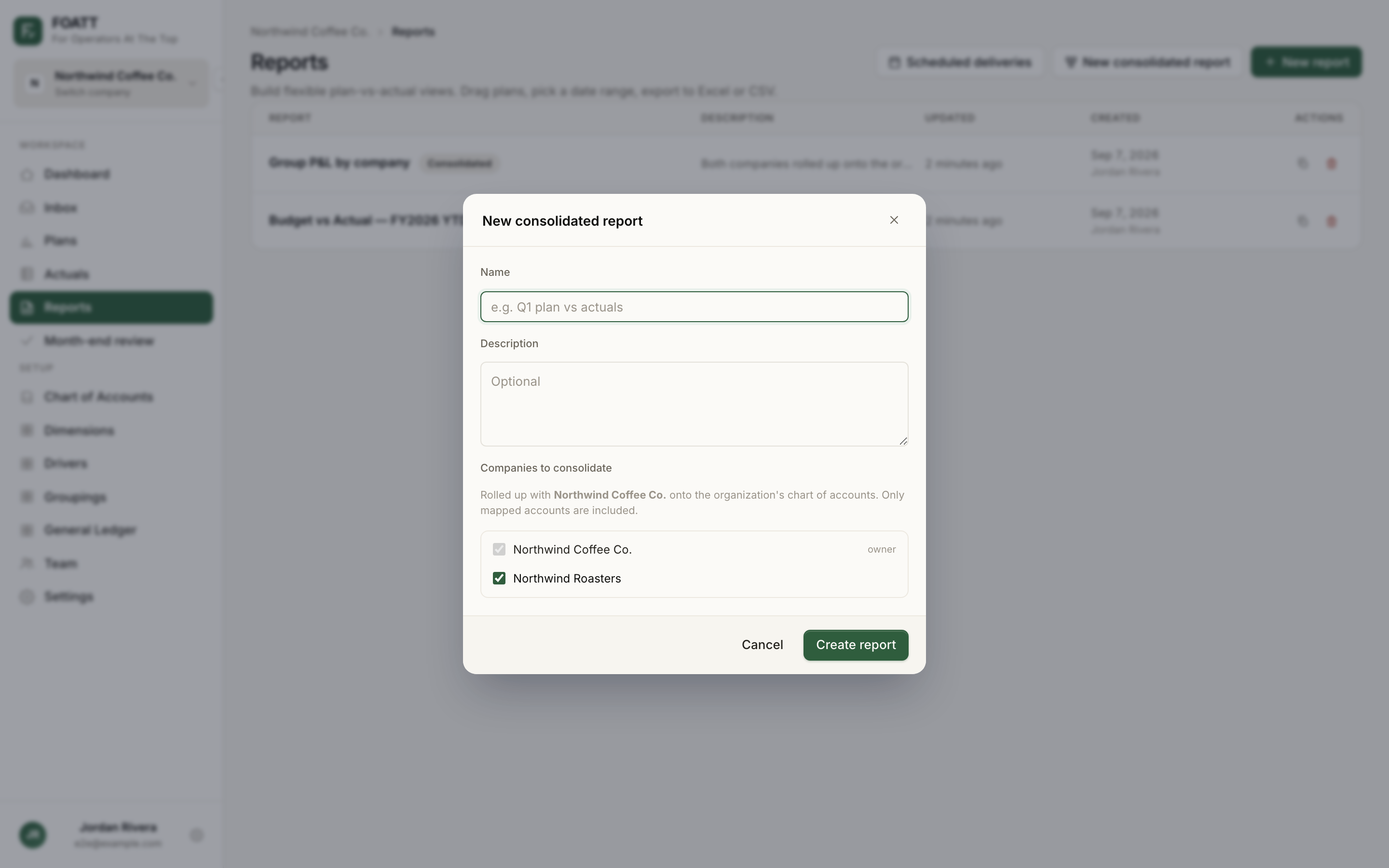
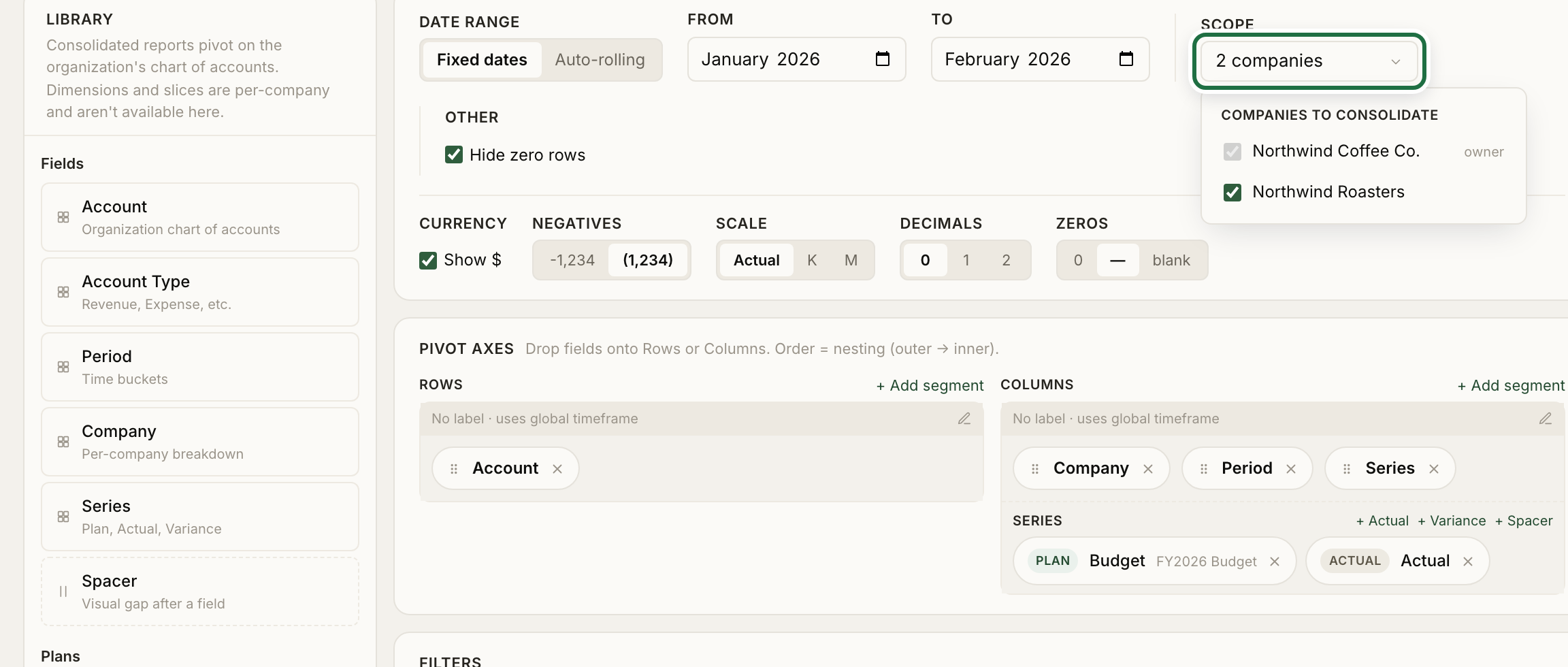
You can adjust the companies later from the Scope picker in the builder's controls. A consolidated report must always include at least one other company.
How consolidation works
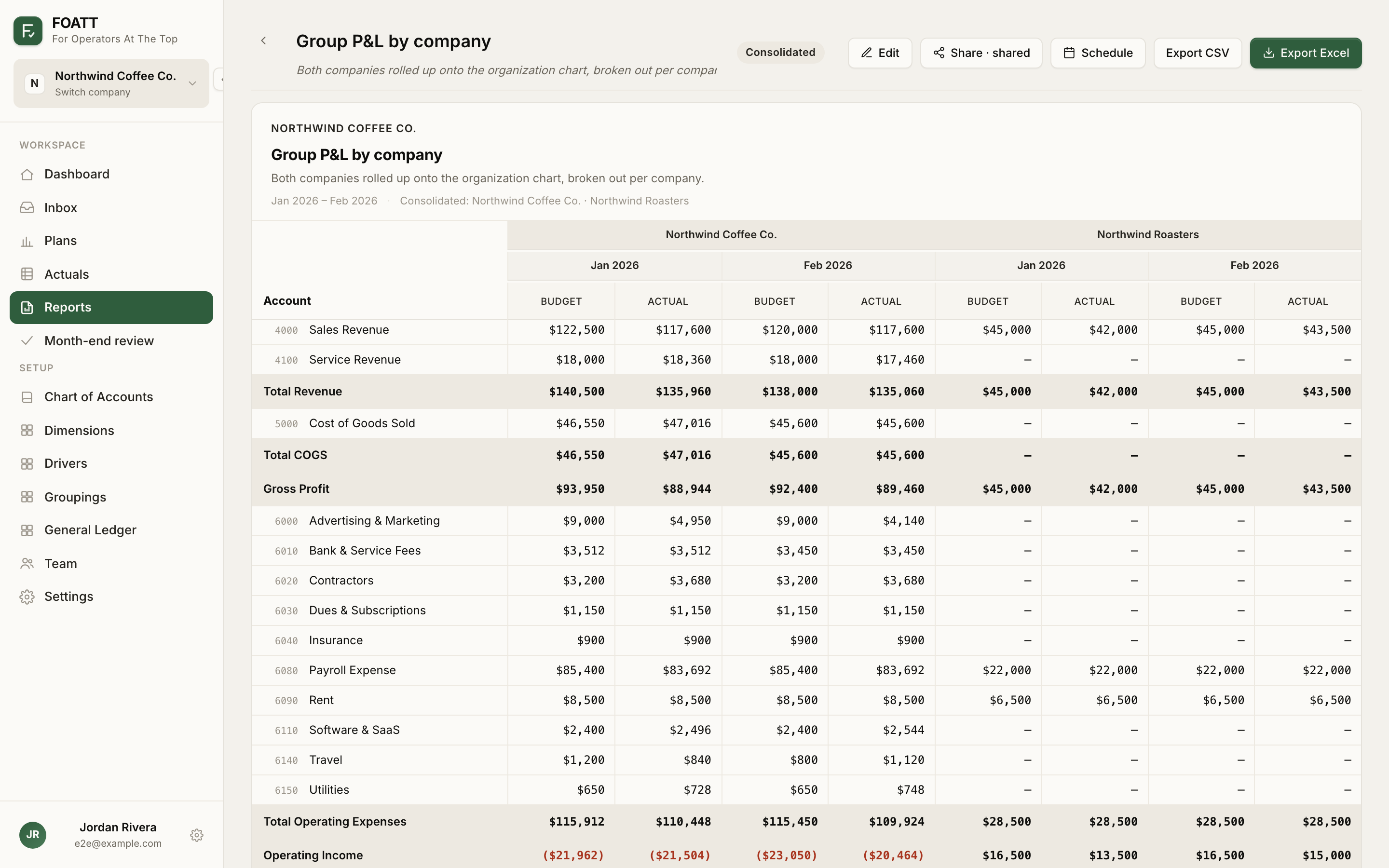
The Account axis uses the organization-level chart of accounts instead of any one company's accounts. Each company's balances roll up onto the matching organization account and are summed. Company accounts that are not mapped to an organization account are left out, and the report shows a note saying so — check the account mappings on the Chart of Accounts page if a number looks low.
Groupings such as Total Revenue are matched across companies by name and summed too.
Available fields
The library offers Account, Account Type, Period, Company, Series, and Spacer. Dimensions, dimension types, and slices belong to a single company and are not available in a consolidated report; if you need them, build a standard report in that company.
Cells in a consolidated report do not drill down to GL transactions.
Break out per company
Drag the Company field onto Rows or Columns to show each entity separately instead of a single consolidated number. The Company chip's inspector lets you pick which of the scoped companies to show.
Plans per company
A plan belongs to one company, so a consolidated plan series needs a plan from each entity. A new consolidated report pins each company's most recent plan automatically. To change one, click the plan chip and choose a plan under Plan per company. A company with no plan pinned contributes nothing to that series, in leaf rows and in groupings alike.
Limits
There are no intercompany eliminations. If two companies in scope trade with each other, those amounts are included on both sides.